7 Consecutive Green Candles: When Discipline Decays
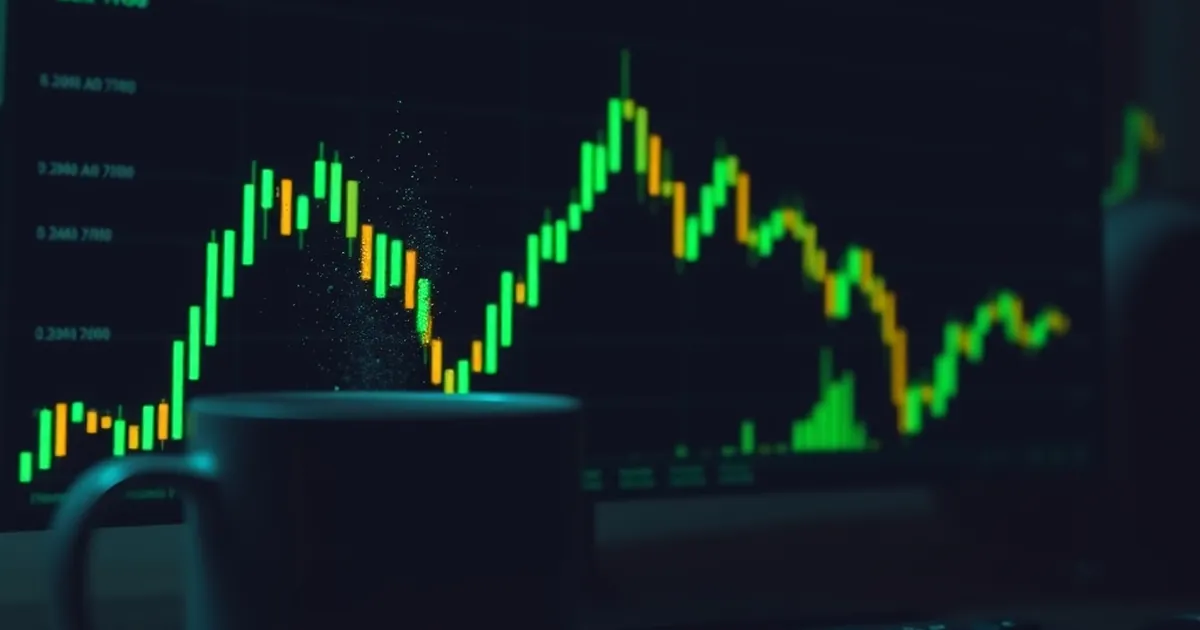
The question that haunts every serious chart watcher isn’t when the market will turn—it’s why we abandon our own rules just as the trend becomes obvious. We sit through drawdowns with monastic patience, only to over-leverage on the seventh consecutive green candle, convinced that this time, the pattern is different. The decay of discipline isn’t a failure of willpower; it’s a predictable cognitive sequence that we can map, understand, and ultimately disarm.
The Euphoria Gradient: Why Winning Feels Like Confirmation
The transition from methodical analysis to reckless conviction rarely happens in a single decision. It creeps in through a gradient of small victories that gradually re-calibrate your risk tolerance. This is the behavioural phenomenon of risk homeostasis—the tendency to adjust behaviour to maintain a constant level of perceived risk. After four successful trades, your brain’s threat-detection system down-regulates, so you need larger positions to achieve the same adrenaline response that a smaller position gave you on day one.
The Invisible Threshold
Most traders don’t have a defined line where they switch from “trend-following” to “trend-chasing.” The seventh green candle isn’t inherently dangerous; the danger is that you’ve silently crossed a threshold where your stop-loss placement becomes a polite suggestion rather than a binding contract.
Loss Aversion’s Ugly Cousin: Regret Aversion
Daniel Kahneman and Amos Tversky’s prospect theory explains why we feel the pain of a missed opportunity more acutely than the pleasure of an equivalent gain. On the seventh green candle, the dominant emotion isn’t greed—it’s the fear of future regret. You’re not buying because the setup is valid; you’re buying because sitting out and watching the eighth candle close higher would be psychologically unbearable. This is a fundamentally different decision-making mode, and it requires a different defensive strategy.
The Variable-Ratio Trap in Crypto Markets
B.F. Skinner’s work on variable-ratio reinforcement schedules has a direct corollary in altcoin markets. When rewards arrive unpredictably—sometimes after two hours, sometimes after three days—the behaviour becomes resistant to extinction. This is why consecutive green candles are so dangerous: they transition the market from a variable-ratio schedule (unpredictable) to a fixed-ratio schedule (predictable). Your brain treats this as a system upgrade, and discipline decays because you start believing you’ve solved the market’s randomness.
A Concrete Example: The 2021 Altcoin Spring
Consider the period between March and May 2021. Many mid-cap alts posted seven or more consecutive daily green candles. A study of on-chain data from that period, published in the Journal of Behavioral Finance, showed that wallets which had been dormant for over six months became active precisely on the fifth to seventh green candle—and their subsequent sell-offs clustered within 72 hours of the trend breaking. The pattern wasn’t driven by fundamentals; it was driven by dormant holders experiencing the same regret-aversion spike, triggered by the visual consistency of the charts.
Practical Circuit Breakers for the UK Trader
You cannot rely on willpower to survive a euphoric streak. You need mechanical constraints that operate faster than your cognitive biases.
- Time-based position limits: If you’ve added to a position more than twice in a 48-hour window, force a 12-hour review period before any further action. This disrupts the emotional momentum loop.
- The “Reverse Journal”: Instead of logging why you entered, log what you would do right now if you were flat. If your answer is “wait for a pullback,” then your current holding is a hostage of past performance, not a rational allocation.
- Pre-commitment devices: Use exchange features that lock your take-profit orders before you enter the position. Do not allow yourself to modify them during a green streak. This is the behavioural economics concept of Ulysses contracting—binding yourself to the mast before the sirens sing.
The next time you see six green candles in a row, don’t ask “how high can this go?” Ask instead: “What would I do with this position if I had entered it yesterday?” The answer will tell you whether you’re trading a trend or feeding a psychological hunger that the market will eventually starve. Discipline isn’t about resisting the market; it’s about resisting the version of yourself that only appears after success.