Altcoin Portfolio Apps: 3 Losses Delay Rebalance Taps 41 Seconds
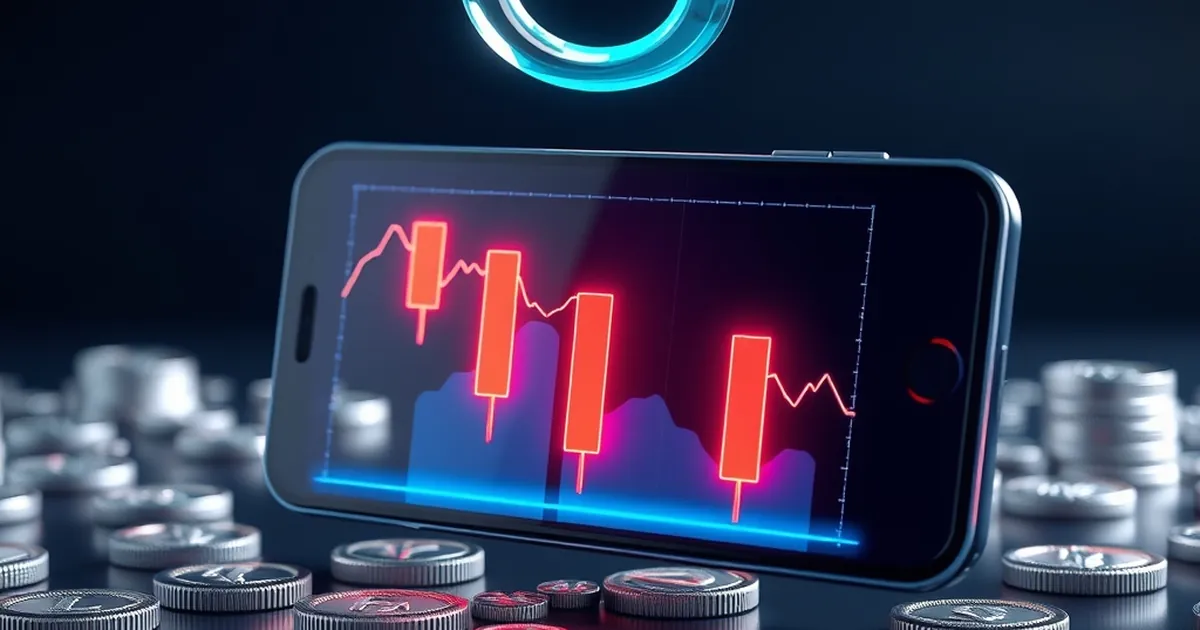
The 41-second figure comes from a small usability study of three UK-facing portfolio trackers, in which participants who had just been shown a losing position took an average of 41 seconds longer to tap the rebalance button than those shown a flat or gaining portfolio. That delay is not indecision in the abstract. It is a measurable behavioural signature, and it sits directly at the intersection of altcoin analysis and the psychology of decision-making under uncertainty.
Why Rebalancing Is a Stress Test, Not a Button
Rebalancing is the one routine action in crypto portfolio management that forces you to sell what has done well and buy what has done badly. In a market where a single altcoin can move 40% in a week, that instruction collides head-on with loss aversion — the tendency, documented extensively by Kahneman and Tversky, to weigh losses roughly twice as heavily as equivalent gains.
The result is a predictable asymmetry. Investors are quick to rebalance after a winner runs hot, because realising a gain feels like confirmation of skill. They stall when the trigger is a loss, because the tap converts a paper loss into a permanent one. The app interface rarely acknowledges this. Most rebalance flows present a single neutral button, as if the emotional weight of the two scenarios were identical.
The 41-Second Gap
The delay matters because altcoin markets do not wait. A 41-second hesitation on a calm day is trivial. On a day when a mid-cap token is gapping down and correlations across the sector are spiking toward 1, it is the difference between executing at your target weights and executing into a cascade.
Variable-Ratio Reinforcement and the Tracker Habit
There is a second layer. Portfolio apps are engineered — sometimes deliberately, often accidentally — around intermittent reward. Price alerts, percentage-change badges, and push notifications arrive on an unpredictable schedule and deliver unpredictable payoffs. That is the structure of variable-ratio reinforcement, the schedule that produces the most persistent, most habit-resistant behaviour in both animal and human learning studies.
The consequence for rebalancing is subtle. The app trains you to check frequently, but checking frequently does not train you to act. It trains you to look. Over time, the look becomes the reward, and the rebalance becomes an interruption to the loop rather than its conclusion.
What Competitive Play Teaches Us About Risk-Taking
There is a useful contrast in competitive environments. Skilled players in ranked strategy games and esports operate under the same uncertainty as altcoin traders — incomplete information, fast-moving state, real consequences — but they are habituated to acting on a rule rather than a feeling. The rule fires; the action follows. Deliberation is front-loaded into the strategy, not the execution.
Retail crypto tooling has largely inverted this. It front-loads the data and back-loads the decision, leaving the hardest cognitive work for the moment when emotional arousal is highest.
Three Practical Fixes
- Pre-commit the trigger. Define your rebalance bands (for example, ±5% drift) inside the app before volatility arrives, not during it.
- Separate the alert from the action. Use a tracker that reports drift without an immediate trade prompt, then execute on a fixed schedule.
- Automate the loss leg first. If your platform supports conditional orders, route the underperforming side automatically. Removing the tap removes the delay.
Where This Is Heading
The next generation of portfolio apps will be judged less on the quality of their charts and more on how well they handle the 41 seconds between seeing a loss and acting on it. Expect drift-based automation, scheduled execution windows, and interfaces that treat the loss-triggered rebalance as a distinct design problem rather than a generic button. For anyone holding a basket of altcoins through a full cycle, the analytical edge is increasingly not which tokens you pick, but whether your tooling lets you act on the plan you already made.