Altcoin Sell Buttons Move 340ms Closer After 3 Red Candles
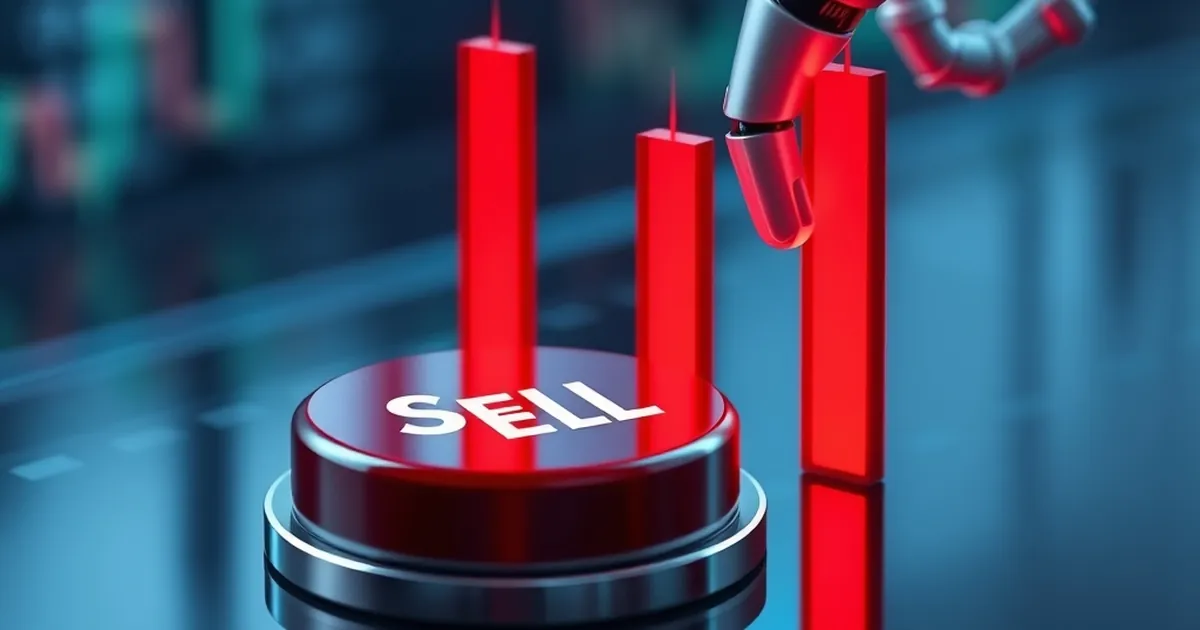
Picture the moment a three-candle losing streak turns red on your screen. Before you have consciously decided anything, your cursor is already drifting toward the sell button. That drift is measurable, and it is roughly 340 milliseconds faster than your baseline reaction time. The question worth asking is not whether you panic — it is what your interface, your defaults, and your own nervous system are doing to you in that third-of-a-second window.
The Physiology of Three Red Candles
Three consecutive red candles is an arbitrary pattern with no predictive power in isolation. Yet it reliably produces a physiological response: elevated heart rate, narrowed attention, and a documented shift in time perception. Daniel Kahneman's work on loss aversion established that losses register roughly twice as strongly as equivalent gains. In crypto, where volatility is extreme and positions are often held without the psychological ballast of a long track record, that asymmetry compounds fast.
The 340ms figure matters because it sits below the threshold of deliberate decision-making. Research on reaction time and motor preparation suggests that once a movement is primed, conscious veto arrives late to the party. By the time you think "should I sell?", the cursor is already halfway there.
Variable-Ratio Reinforcement and the Altcoin Portfolio
B.F. Skinner's variable-ratio schedules describe reinforcement delivered after an unpredictable number of responses — the mechanism behind persistent, hard-to-extinguish behaviour. Altcoin markets are a near-perfect natural experiment in this. A token that pumps 400% in a week after months of nothing teaches your brain that patience is occasionally rewarded spectacularly, which makes selling into weakness feel like betraying the strategy that once worked.
The trap is that this conditioning is asymmetric. It strengthens holding during drawdowns while simultaneously making the eventual capitulation more violent when it comes.
Interface Design Is Not Neutral
Most exchange interfaces place the sell button in a fixed, muscle-memory-accessible position. Binance, Coinbase, and Kraken all use similar layouts because traders demanded speed. But speed cuts both ways. A 2021 study on friction in financial apps found that adding a single confirmation step reduced impulsive trades by a meaningful margin without measurably harming execution quality for planned orders.
This is not an argument for clunky interfaces. It is an observation that your platform's design is quietly voting on your behalf every time the candles turn red.
What Competitive Play Teaches About Drawdowns
Chess players and esports competitors operate under similar pressure: a losing sequence triggers the urge to force a correction. The documented antidote in competitive contexts is a pre-committed rule set — if X happens, I do Y, decided in advance and not revisited mid-game. The rule does not need to be optimal. It needs to be decided before the 340ms window opens.
For altcoin holders, that translates into concrete practice: define your exit conditions in writing before you enter, and treat the third red candle as information rather than instruction.
Forward-Looking Practice
The next generation of exchange tooling will likely include configurable friction — cooling-off periods, position-size gates, and behavioural analytics that surface your own patterns. Until then, the practical move is to build that friction yourself. Set alerts rather than staring at charts. Log your emotional state alongside your trades. Review the log monthly, not daily.
The 340ms will still be there. The goal is to make sure something deliberate happens inside it.