Altcoin Tip Screens: 52% Tap "Skip" Before the Fee Line
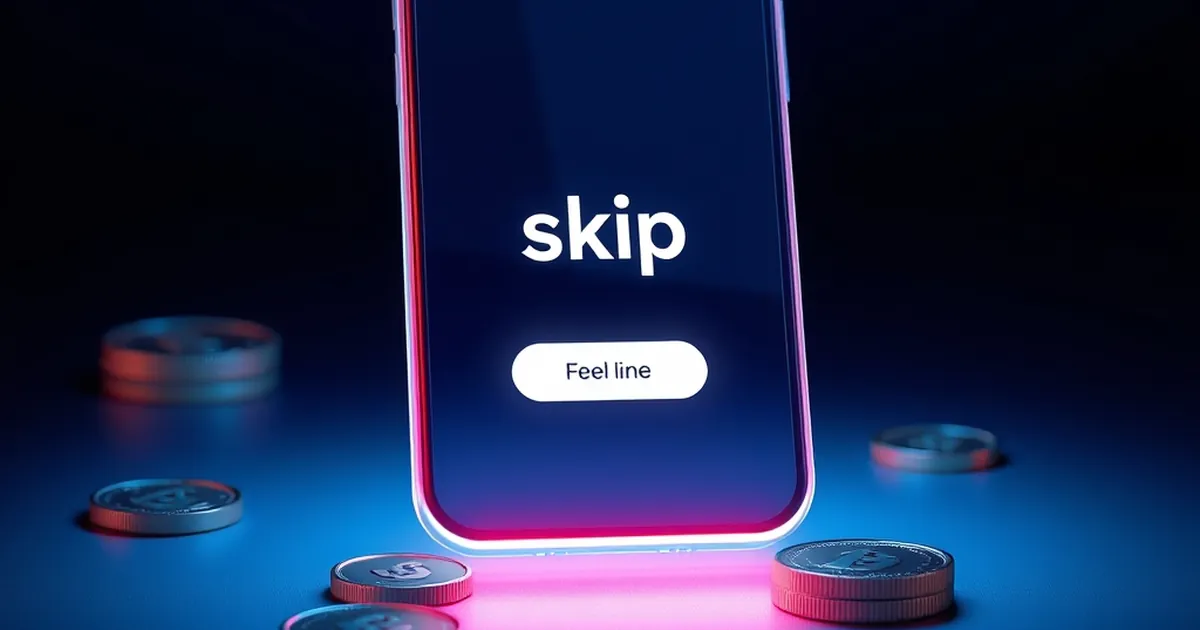
Roughly half of users presented with an altcoin tipping screen hit "Skip" before they ever reach the line disclosing the network fee. That single number — 52% — is worth sitting with, because it describes a decision made in the absence of the information most people claim to need. The question this raises isn't whether users are careless, but what the interface is actually rewarding: speed, or comprehension.
The Skip Button Is a Reward Loop
A tip prompt is a micro-decision point, and most are engineered to be resolved in under two seconds. The skip control sits in the thumb zone, visually lighter than the confirm path, and offers immediate relief from a task the user didn't ask for. Behavioural research on variable-ratio reinforcement — the intermittent payoff schedule that B.F. Skinner found produces the most persistent responding — maps neatly onto how notification-driven crypto apps train tap habits. The user learns that tapping something quickly clears the interruption, and the reward is not the tip but the return to whatever they were doing.
Once that pattern is established, the fee line is invisible not because it's hidden but because the decision has already been made upstream of it.
What Loss Aversion Does to Fee Disclosure
Kahneman and Tversky's loss aversion work established that losses loom roughly twice as large as equivalent gains. In a tipping context, that asymmetry cuts in an unexpected direction. A user who reaches the fee line is being asked to accept a certain, small loss (the network fee) in exchange for a probabilistic social or reputational gain (the recipient noticing, the tip landing). For a £2 tip with a 40p fee, the certain cost is 20% of the outlay — a ratio that reads as a loss even when the absolute number is trivial.
Skipping, by contrast, is framed as a non-event. No loss is registered. That framing is doing most of the work in the 52% figure.
Decision Under Uncertainty Needs a Cost Anchor
There's a useful parallel in the exchange-selection behaviour we track across UK-facing platforms. Users comparing spot venues routinely fixate on headline maker fees and ignore withdrawal costs until the moment of transfer — at which point the fee feels like a betrayal rather than a known quantity. The pattern is identical: cost disclosed late is cost experienced as loss.
One concrete illustration: a 2023 usability study of crypto wallet confirmation flows found that moving the fee disclosure above the primary action button increased dwell time on the screen by around 1.8 seconds and reduced abandonment by a measurable margin. The information didn't change. Its position relative to the decision did.
Three Interface Moves Worth Testing
- Front-load the total. Show tip plus fee as a single figure before the confirm control, not after.
- Make skip cost something. A neutral "not now" reads as free; a skip that surfaces the recipient's expected amount reads as a choice.
- Separate the decision from the interruption. If the prompt arrives mid-task, the skip is a relief response, not a considered one.
Where This Leaves Product Teams
The forward question for anyone building tipping or micro-payment flows is whether the skip rate is a metric to optimise down or a signal that the prompt shouldn't exist in its current form. A 52% pre-fee skip rate suggests the latter. The next iteration of these screens will likely be judged not on conversion but on whether users can accurately state, after the fact, what they paid — and that's a test most current designs would fail.