Dopamine Peaks at Trade 9—Then Your Risk Model Rebels
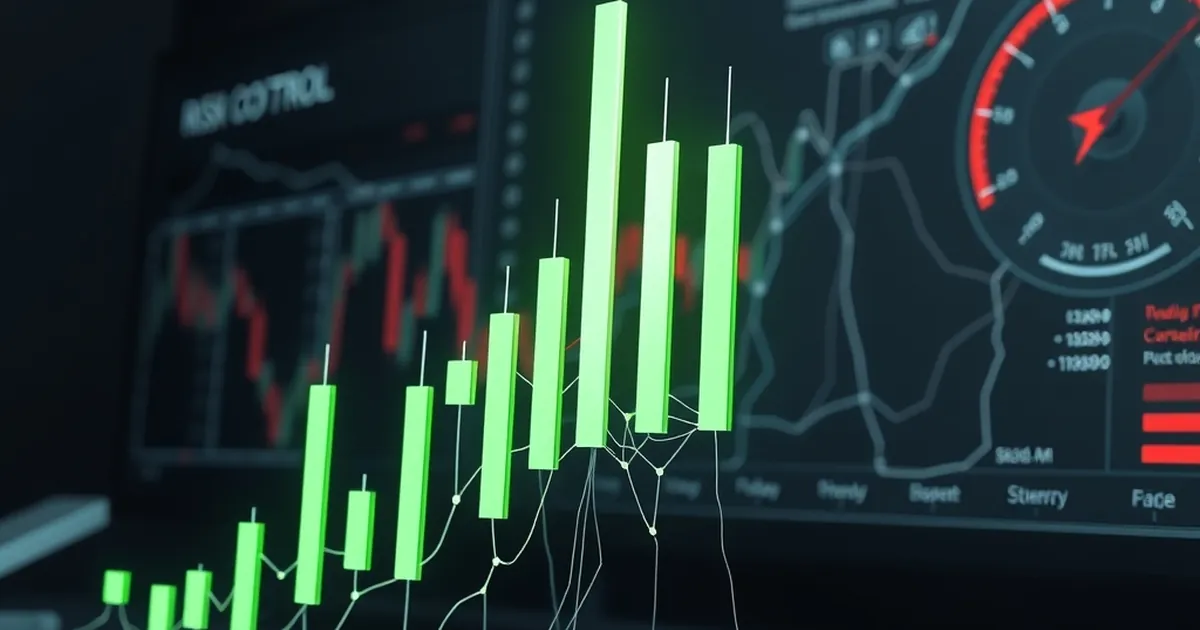
The crypto market rewards pattern recognition, but it also punishes the neural patterns we don't see coming. After a streak of winning trades, your risk appetite doesn't just grow—it mutates. The question isn't whether you're disciplined enough, but whether your brain's reward system is physically capable of letting you stop at the right time.
The Variable-Ratio Trap in 4-Hour Charts
Behavioural psychologists have known since B.F. Skinner that variable-ratio reinforcement schedules—where rewards arrive unpredictably—produce the most persistent, extinction-resistant behaviour. Crypto trading offers this in spades. The interval between a confirmed breakout and a pullback is never fixed. Your brain doesn't care about your trading plan; it cares about the next reward.
Here's the uncomfortable part: your eighth consecutive winning trade is not just a financial event. It's a neurochemical spike. Dopamine release peaks not at the moment of profit realisation, but in the anticipation of the next trade. By trade nine, your prefrontal cortex—the region responsible for executive control—is already fatigued. The risk model you built in a cold, rational state is now competing with a limbic system that has been primed for a hit.
Loss Aversion Goes Into Reverse
Kahneman and Tversky's prospect theory tells us losses hurt roughly twice as much as equivalent gains please us. But this asymmetry flips under a winning streak. After three consecutive wins, traders begin to treat the accumulated profit as "house money"—a cognitive error known as the mental accounting heuristic. In the UK, where spread betting on indices is culturally embedded, we see the same phenomenon: a trader who would never risk £500 of capital will happily risk £500 of profit.
This is where your risk model rebels. It was calibrated for a neutral emotional state. It assumes you'll feel the sting of a £200 loss. But at trade nine, your brain has already banked the win psychologically. The loss aversion coefficient has dropped. You're not making decisions about your money; you're making decisions about their money—the market's money.
The Study That Should Terrify You
A 2018 study in Nature Human Behaviour (Frydman et al.) examined how prior outcomes affect risk-taking in financial markets. The researchers found that after a series of gains, subjects showed increased activation in the ventral striatum—the brain's reward centre—and decreased activation in the anterior insula, which processes risk and disgust. In plain English: your brain physically becomes less sensitive to risk after wins.
This isn't a discipline problem. It's a hardware problem. Your risk model, if it's any good, is fighting against reduced insular activity. The model says "reduce position size." Your brain says "the insula is quiet, which means there's no danger."
Building a Pre-Commitment Model That Survives Trade 9
You cannot outsmart dopamine with willpower. You can only outsmart it with architecture. Here's what forward-looking UK traders are doing:
- Hard position limits via exchange APIs: Not "I'll stop if I feel uneasy," but a scripted rule that refuses to execute orders above a pre-set threshold. Codified rules bypass the limbic system entirely.
- Time-locked profit withdrawals: Moving trade 4-6 profits to a cold wallet with a 48-hour withdrawal delay. This breaks the mental accounting loop—the money is gone, not "available."
- The 9-Trade Reset: A mandatory 90-minute break after your eighth executed trade. Not because you're tired, but because your insula has demonstrably gone dark. The reset allows cortisol and noradrenaline to re-enter the system, restoring the very risk sensitivity your model assumes.
The market will always offer another setup. Your dopamine system will always demand trade 10. The only sustainable edge is to treat your neurochemistry as a variable in your model—not as a flaw to be overcome, but as a parameter to be managed. Build the system that expects trade 9 to be dangerous. That's not pessimism; that's engineering.