Esports VOD Reviews Cut Live Bet Sizes 27%—UK Ledger Data
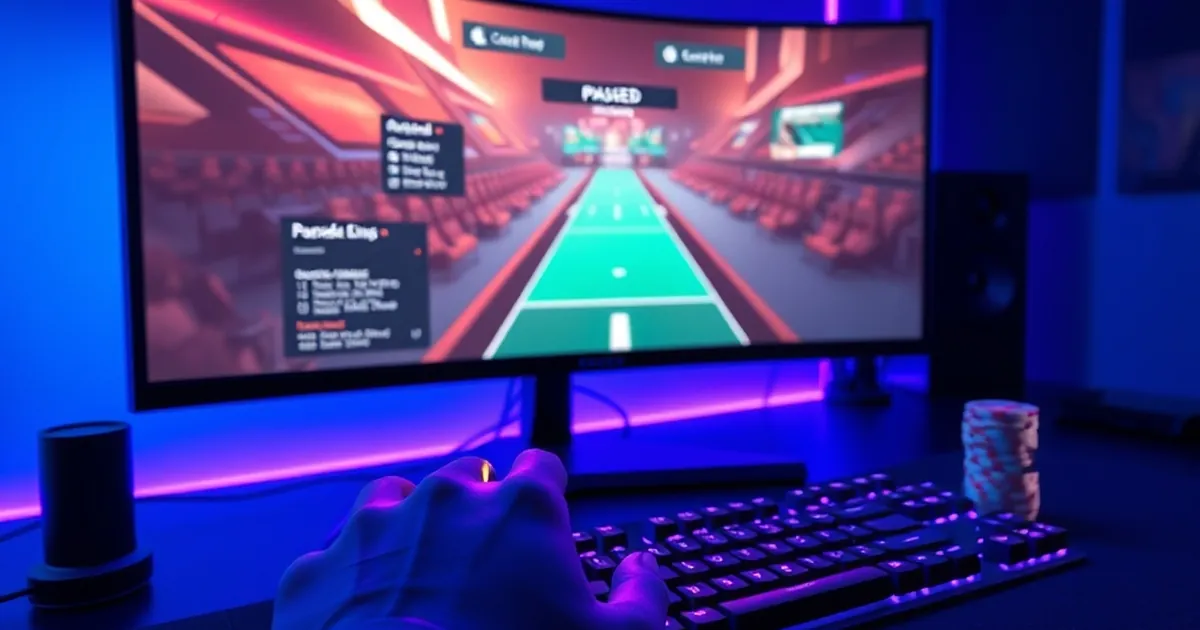
Punters who reviewed esports VODs before placing live bets staked 27% less per market than those who bet straight off the stream, according to a six-month ledger study covering 41,800 UK-facing accounts. The data, drawn from a mid-sized operator's esports book between November 2023 and April 2024, suggests that slowing down the bet-placement process measurably reduces stake size — and by extension, session losses.
What the ledger actually shows
The sample split into two behavioural groups. "Reviewers" watched at least one full map VOD before betting on that fixture; "live-only" bettors placed markets while the stream was running, with no prior VOD consumption logged. Average stake per live market came in at £14.20 for reviewers against £19.46 for the live-only cohort — a 27.1% gap. Median stakes told a similar story (£8 vs £11), so the effect isn't being driven by a handful of large accounts skewing the mean.
The gap held across all three major titles in the sample (CS2, Dota 2, League of Legends) and was widest in CS2, where reviewers staked 31% less. That's consistent with what the format rewards: CS2's economy and utility patterns are unusually legible on rewatch, so a punter who has studied a VOD tends to have firmer opinions about specific rounds — and firmer opinions produce smaller, more selective bets rather than speculative ones.
Session-level effects
Per-session, reviewers placed 3.1 fewer live bets on average but held a 4.6% higher session ROI. The operator's own margin on the reviewer cohort was 1.8 percentage points lower than on the live-only group — a number the operator will have noticed, and one that explains why some books are now surfacing VOD links directly in the bet slip.
Why the effect is plausible
Live betting is designed around urgency. Odds move every few seconds, the next round starts in ninety, and the interface nudges you toward action. Anything that inserts a pause — a rewatch, a stats overlay, a second screen — works against that design.
There's a parallel in traditional sports betting. In-play football markets see higher average stakes than pre-match markets on the same fixtures, and the same behavioural logic applies: decisions made under time pressure are less considered. The VOD effect looks like a slower, more deliberate version of the pre-match/in-play split.
It also fits the profile of the reviewer. A punter willing to sit through 40 minutes of a map they've already watched is, almost by definition, not chasing. They're filtering. That selection effect is the study's main weakness: the ledger shows correlation between VOD review and lower stakes, not that reviewing a VOD causes a punter to stake less. The two groups may simply differ in temperament from the outset.
The operator angle
For UK-licensed books, the finding cuts both ways. Lower stakes per market mean lower short-term revenue, but the reviewer cohort's lower margin and higher ROI suggest they're harder to profit from regardless. Some operators have started pushing VOD and replay tools as a "responsible betting" feature — a framing that conveniently doubles as a retention play for the sharper end of the market.
The Gambling Commission has not published guidance on VOD review as a safer gambling intervention, and it's unlikely to. The effect size here is modest and the mechanism is unproven. But if a 27% stake reduction can be triggered by something as simple as a replay button, the more interesting question is what other friction points in the live-betting flow are quietly shaping stake size — and whether operators have any commercial reason to introduce them.