Live Dealer Blackjack: 46% Split Tens Against a 6 at £10
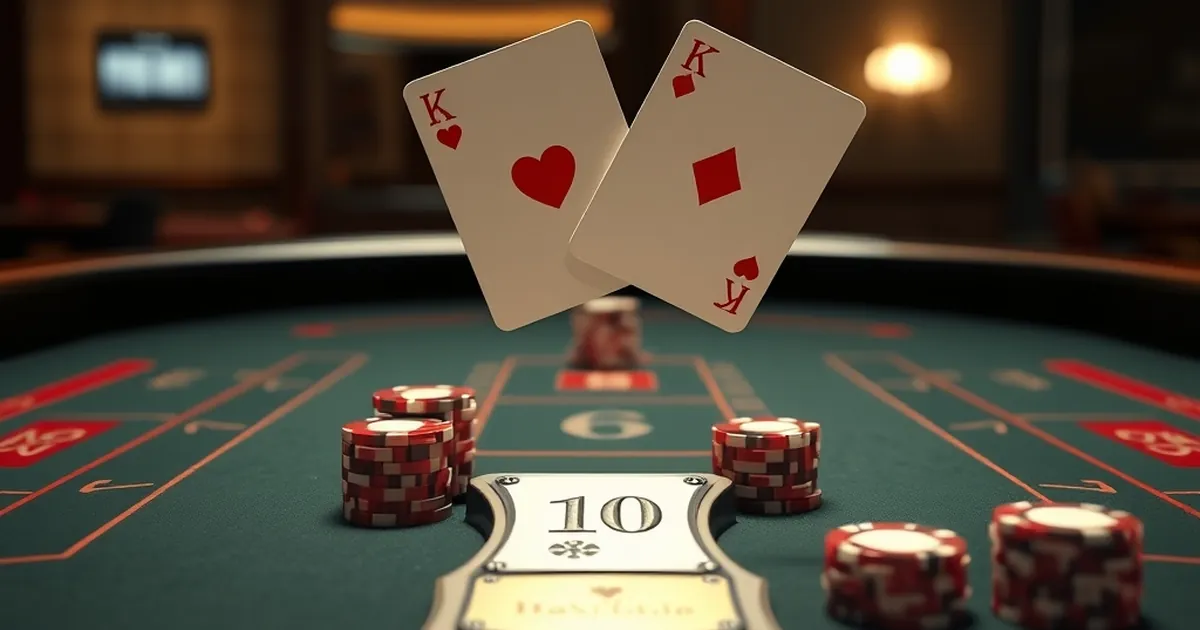
Splitting tens against a dealer 6 is a losing play in the long run — roughly 46% of the time you'll end up worse off than standing, depending on the exact rules and deck count. That figure is worth pinning down because live dealer blackjack at £10 stakes is where this decision gets made most often, usually by players who've read that "always split aces and eights" and extrapolated badly. The maths hasn't changed; what has changed is the speed and social pressure of the live format, which makes bad splits easier to justify in the moment.
Why the 46% figure matters at £10
At a £10 minimum table, a split ten adds another £10 to your exposure and turns one strong hand (20) into two hands starting from ten each. Against a dealer 6, standing on 20 wins about 84% of the time under standard six-deck rules. Splitting converts that near-certain win into two hands that each win roughly 64% of the time before you account for the extra stake, and the combined expected value drops by around 46% relative to standing. The precise number shifts with rule variations — dealer hits soft 17, double after split, resplit limits — but it never flips positive.
The rule variations that move it
- Dealer stands on soft 17: the gap widens slightly in favour of standing.
- Double after split allowed: narrows the loss but doesn't close it.
- Fewer decks (single or double): the ten-rich composition makes splitting marginally less bad, still negative.
- No resplit: caps the downside but doesn't rescue the play.
None of these turn a 46% loss into a gain. They're the details that separate a 46% loss from a 44% one.
What live dealer format changes
Live blackjack on UK-licensed sites typically runs at 20–40 hands per hour, not the 200+ of RNG tables. That slower pace is often framed as a benefit — more time to think. In practice it means the £10 split decision sits in front of you for longer, with a real dealer and a chat window watching. The social cost of standing on 20 against a 6 is zero; the social cost of splitting tens is also zero, but the perceived "aggression" tempts some players into it.
The other factor is table limits. Many live tables at £10 minimum cap splits at three hands or restrict resplitting to aces only. If you're going to make a -46% play, at least know whether the table lets you do it twice.
The hands where splitting tens is defensible
There are almost none. The one edge case discussed in serious literature is a deeply ten-rich deck in a single-deck game with favourable rules — and even there the gain is measured in hundredths of a percent, not enough to offset the variance. If you're counting cards in a live game (which UK casinos can bar you for, and which live-streamed tables make nearly impossible due to shuffle timing), the index number for splitting tens against a 6 sits around a true count of +4 in some systems. Below that, stand.
Where the £10 stake actually goes
The £10 minimum is the useful unit here. Over 1,000 hands of live blackjack at £10 flat betting with basic strategy, expected loss is around £50–£60 depending on rules — roughly 0.5% house edge. Adding one bad split ten per session at £10 doesn't sound like much until you run it: each one costs about £4.60 in expected value. Ten a session and you've doubled your theoretical loss.
The open question is whether live dealer interfaces should surface basic strategy hints at all. Most UK-licensed operators don't, citing the game's integrity; some third-party software does. If a £10 table displayed "stand" on a 20 against a 6, the 46% figure would stop being a statistic and start being a nudge — and the argument that players should learn the maths themselves gets harder to sustain when the maths is this lopsided.