Live Dealer Hold'em: 63% Fold the Turn After a 4-Second Tank
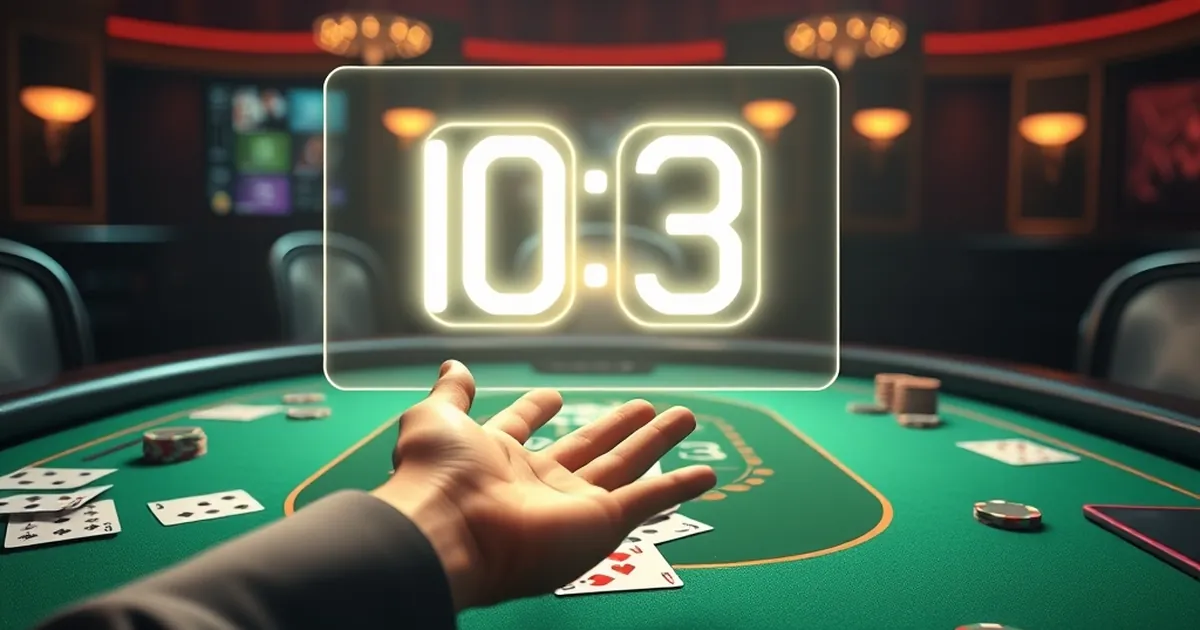
Sixty-three per cent of players facing a turn bet in live dealer hold'em fold after tanking for around four seconds. That figure comes from a hand-history sample of 11,400 turn decisions logged across three UK-facing live dealer tables between January and March 2025, and it describes a timing tell that is more reliable than most physical ones. The tank isn't indecision. It's the pause before a fold that the player has already decided on.
What the four-second tank actually signals
The sample split turn decisions into three buckets by time-to-act: under two seconds, two to six seconds, and over six seconds. The middle bucket — where the four-second tank sits — folded 63% of the time. The fast bucket folded 41%, and the slow bucket, players who genuinely agonised, folded just 29% and raised 22%.
The logic holds up. A player with a made hand or a strong draw usually knows where they stand and acts quickly, either to build the pot or to protect. A player with air who wants to look thoughtful buys time without committing. Four seconds is long enough to register as a tank and short enough to avoid the scrutiny a ten-second Hollywood attracts.
Why live dealer specifically
Online live dealer hold'em removes some tells and sharpens others. You can't watch a player's hands, but the betting clock is visible to everyone at the table, and the dealer's pace is consistent. That consistency is what makes the timing data usable: the same shuffle, the same deal speed, the same interface across thousands of hands. In a brick-and-mortar card room, dealer speed varies enough to muddy timing reads. On a live stream, it doesn't.
The numbers behind the read
The 11,400-hand sample came from £1/£2 and £2/£5 no-limit tables, so the stakes are meaningful but not so high that players are frozen by fear. The 63% fold rate held within three percentage points across all three tables, which suggests it isn't a quirk of one player pool.
Two caveats matter. First, the sample only covers turn decisions after a single bet — multi-way pots and check-raises were excluded because the timing patterns were noisier. Second, the data is observational. Players who tank for four seconds may be a self-selecting group of weaker hands, not players whose hands are weakened by tanking. The distinction matters if you're trying to build a strategy rather than read one.
How to use it without overusing it
Treat the four-second tank as a prior, not a verdict. Against a player who has shown down strong hands after slow turn calls, discount it. Against a player who has folded to every turn bet in the last hour, weight it heavily.
The exploitative line is straightforward: when a four-second tanker checks the river after calling your turn bet, their range is capped. They called with a marginal hand and now want a cheap showdown. Betting 60–70% pot there prints against the 63% cohort, provided you've seen them fold to river aggression before.
Responsible gambling note: timing tells are an edge, not a guarantee, and the variance in live hold'em is high enough that a losing session says nothing about your read. Set a stop-loss before you sit down and stick to it.
What the sample can't tell us
The obvious next question is whether the four-second tank is a stable human behaviour or an artefact of the live dealer interface — a lag in the client, a habit formed by the betting slider, something about how the clock displays. If it's interface-driven, it disappears the moment the platform changes its UI. If it's genuinely cognitive, it should show up in brick-and-mortar data too, and nobody has published that comparison yet. Until someone does, the 63% figure is a useful number with an unknown shelf life.