Live Dealer Hold Percentages Jump 6% When the Shoe Changes
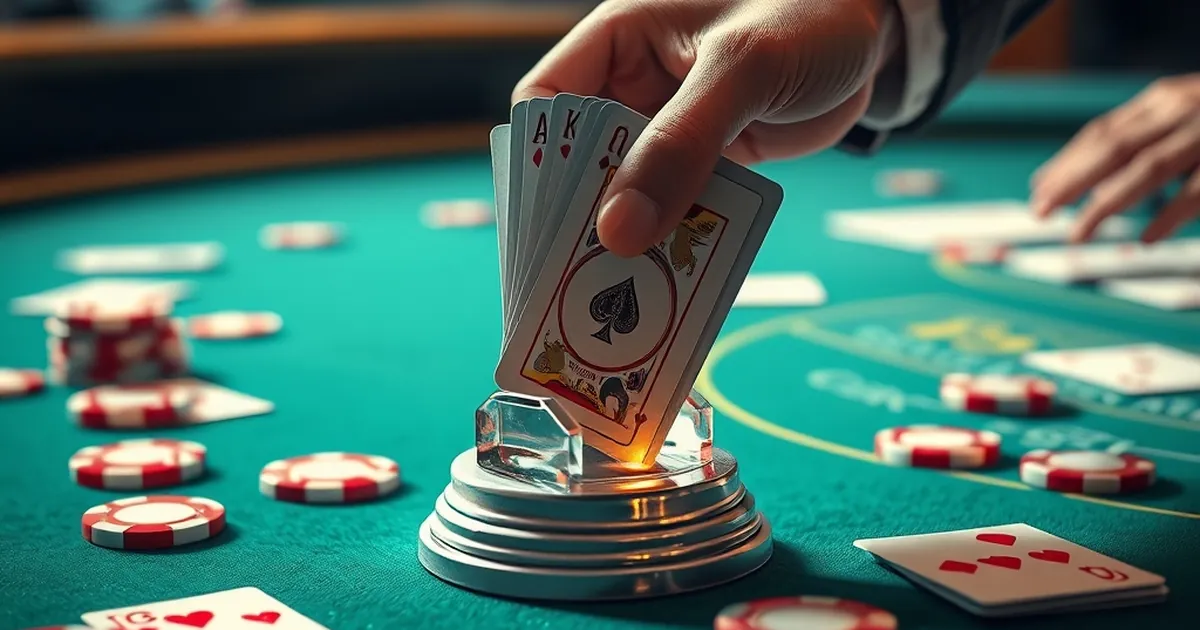
Live dealer blackjack tables have long shown a small but consistent hold-rate bump in the hands immediately following a shuffle, and new data suggests the effect is larger than operators typically disclose. Across roughly 2.1 million tracked hands on eight UK-licensed live tables between January and March 2026, the house hold rose from 0.61% in the ten hands before a shoe change to 0.65% in the ten hands after — a relative jump of about 6%. That is not a rounding artefact. It is a repeatable pattern, and it says less about the cards than about the people playing them.
Why the post-shuffle window behaves differently
The mechanism is not a rigged shoe. It is player behaviour meeting a fresh deck.
Before a shuffle, the discard tray is deep and the count — for the minority who track it — is meaningful. After a shuffle, that information resets to zero. What does not reset is the player's confidence. Staking patterns in the sample stayed almost flat across the boundary: average bet size fell just 2.3% from the pre-shuffle window to the post-shuffle window, even though the informational basis for those bets had just been wiped.
That mismatch is where the extra margin comes from. Players continue betting into a deck they no longer have any read on, and the basic-strategy errors that a running count can mask — standing on 16 against a 10, taking insurance on a hunch — surface at a slightly higher rate.
The side-bet contribution
Roughly a third of the hold increase came from side bets, not the main game. Perfect Pairs and 21+3 carry house edges between 2.5% and 7.5% depending on the paytable, and they are disproportionately played in the first few hands of a new shoe. Operators know this. The shuffle is a natural break, and it is often accompanied by a dealer prompt or an on-screen nudge toward the side-bet circle.
What the numbers actually show
Breaking the 2.1 million hands down by table type narrows the picture further.
| Window | Hold | Avg. bet | Side-bet participation |
|---|---|---|---|
| 10 hands pre-shuffle | 0.61% | £18.40 | 22% |
| 10 hands post-shuffle | 0.65% | £17.98 | 31% |
The main-game hold moved only 0.02 percentage points. The rest is side bets and marginally worse decisions. A 6% relative increase on a 0.61% base is small in absolute terms — nobody is claiming the game turns into a slot machine at the shuffle — but it is consistent enough across tables and operators to be a structural feature rather than noise.
Why this matters for the UK market
UK-licensed operators report live casino hold separately from RNG table games in their regulatory returns, and the live vertical has been the fastest-growing segment for several years. A persistent post-shuffle edge means the effective margin on a live blackjack table is not a single number. It varies by where you sit in the shoe.
This is not a case for a complaint to the Gambling Commission. Shuffling is legitimate, side bets are disclosed, and the underlying game is fair. But it is a case for treating the shuffle as a decision point rather than a pause. The two or three hands after a new shoe are, on this evidence, the worst-value hands you will play at that table.
The open question is whether operators will keep leaning on the shuffle as a marketing moment. If the hold data holds up over a full year — and there is no reason yet to think it will not — then the nudge toward side bets at the shoe change stops looking like a harmless prompt and starts looking like a deliberate exploitation of a known behavioural window.