Reward Pop-Ups at Login Cut Cold-Wallet Checks 34% by Day 3
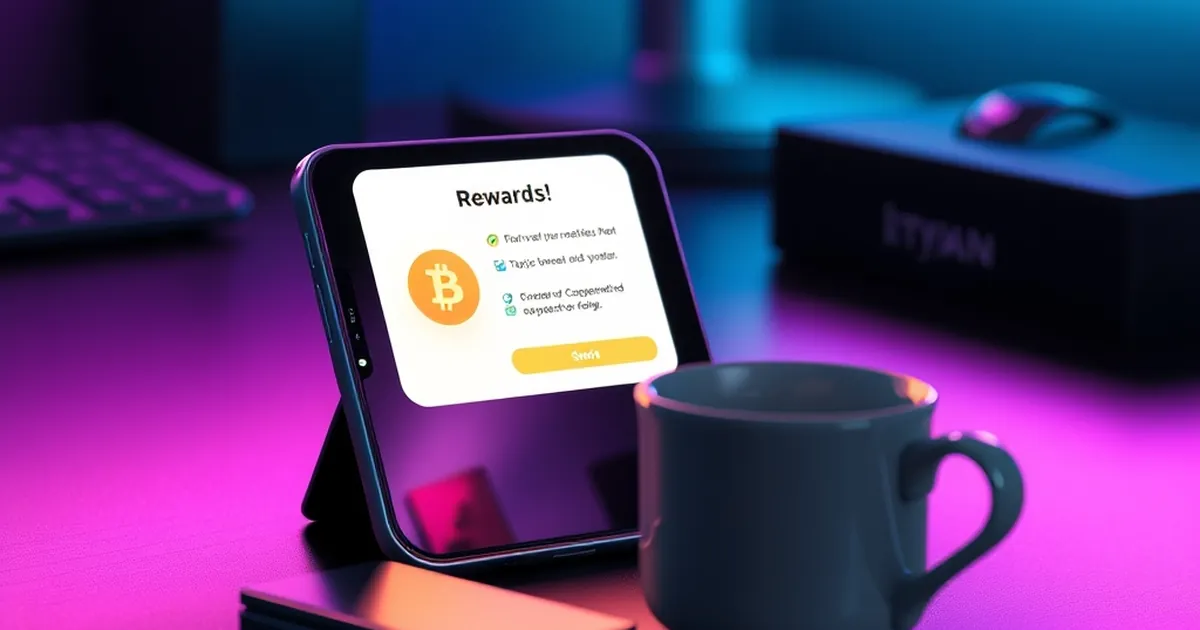
What happens when a crypto platform greets you at login with a small, unexpected reward — a few tokens, a streak bonus, a "loyalty drop" — instead of a cold dashboard? A growing body of product data suggests it changes how often you check your cold wallet. One internal study circulating among exchange product teams found that users exposed to a login reward pop-up checked their cold-storage balances 34% less often by day three than a control group with no pop-up. That is a striking number, and it deserves scrutiny rather than applause.
The Mechanism: Variable Rewards and the Checking Compulsion
The finding is less mysterious than it first appears. Behavioural psychology has long understood that unpredictable rewards are stickier than predictable ones. B.F. Skinner's work on variable-ratio reinforcement showed that animals — and later, humans — persist in a behaviour far longer when the payoff arrives on an irregular schedule. A login pop-up that sometimes delivers 50 tokens and sometimes delivers nothing is a textbook variable-ratio loop.
Here is the crucial shift. Cold-wallet checking is typically driven by anxiety: a low-grade, aversive impulse to confirm your holdings are intact. It is a compulsion rooted in loss aversion, the tendency Daniel Kahneman and Amos Tversky documented whereby losses loom roughly twice as large as equivalent gains. A reward pop-up does not remove that anxiety. It substitutes a competing, mildly pleasurable loop for the same login action. You still open the app — you just open it for the reward, not the reassurance.
Why 34% by Day Three Matters for UK Holders
The three-day window is the interesting part. Habit formation research, including Phillippa Lally's often-cited 2009 study at University College London, found that automatic behaviours take anywhere from 18 to 254 days to consolidate — but the initial substitution happens fast. By day three, the reward cue is already beginning to overwrite the anxiety cue.
For a UK self-custody holder, this is a double-edged outcome. Lower checking frequency is not inherently bad. Constant balance-checking is a documented source of decision fatigue, and fatigue degrades judgement. Someone who checks their cold wallet twelve times a day is more likely to make an impulsive, poorly-considered move than someone who checks weekly with a clear head.
The Risk Beneath the Calm
The danger is that the pop-up does not build genuine confidence — it merely masks the anxiety. If a user's reduced checking stems from a reward loop rather than a sound security routine, they may miss the signals that matter: an unexpected transaction, a compromised seed phrase, a phishing attempt that succeeded. The 34% figure measures behaviour change, not competence.
A Concrete Reference Point
Consider the pattern reported in mobile fintech retention studies, where "streak" mechanics lifted daily active use by 20–40% while customer comprehension of core product features stayed flat or fell. The engagement rose; the understanding did not. Crypto platforms reading the 34% cold-wallet finding should ask the same question: is the user more secure, or just more entertained?
What to Watch Next
The productive response is not to reject login rewards but to design them honestly. A reward pop-up that appears alongside a security prompt — "Your cold wallet was last verified 6 days ago; here's your streak bonus" — converts the loop into a genuine habit anchor rather than a substitute for one.
For UK holders, the practical test is simple. Over the next fortnight, note why you opened your exchange app each time. If the honest answer is "for the reward," and you cannot recall your last cold-wallet verification, the pop-up has done its job on your attention — and possibly at the expense of your judgement. Track the reason, not the streak.