Why Crypto Reward Loops Break After 7 Consecutive Airdrops
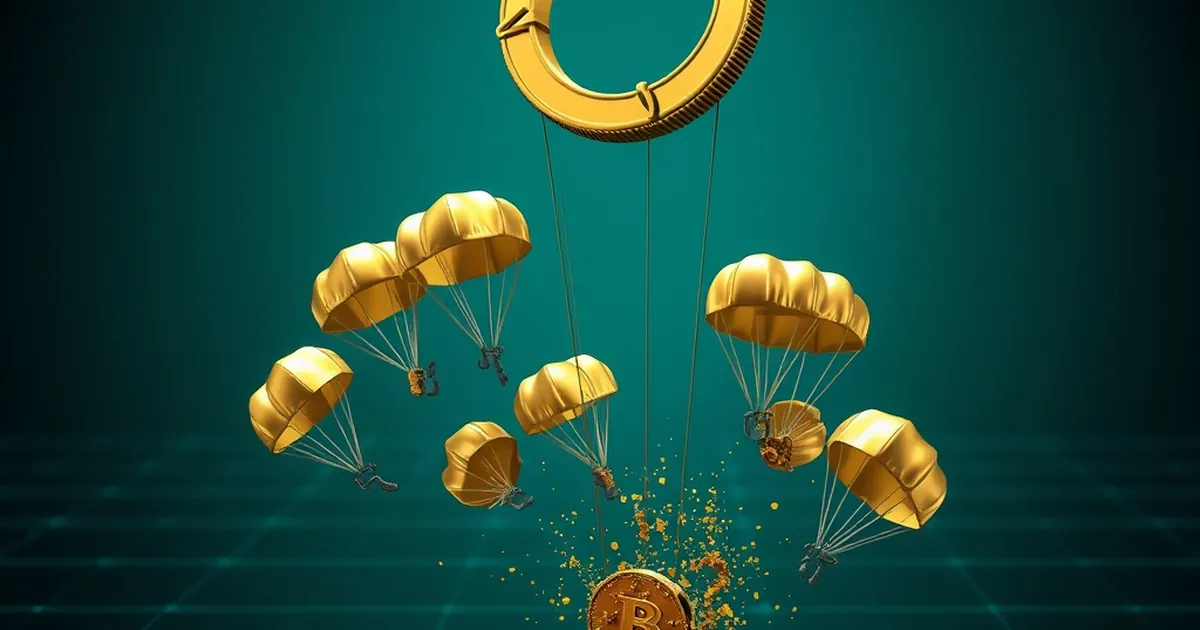
The thrill of a surprise airdrop is a potent psychological hit, a sudden windfall that feels like a reward for loyalty. But after the seventh consecutive token drop, something shifts. The dopamine surge weakens, the community chatter turns from gratitude to entitlement, and the project’s momentum inexplicably stalls. Why does this predictable crash happen, and what does it tell us about the fragile architecture of digital incentive design?
The Variable-Ratio Reinforcement Trap
We can trace this phenomenon directly to B.F. Skinner’s foundational work on operant conditioning. Airdrops operate on a variable-ratio reinforcement schedule—you don’t know when the reward arrives, only that it might. This is the same mechanism that makes slot machines compelling (though we are not discussing that here). In crypto, it keeps users checking the dashboard, connecting wallets, and engaging with governance.
The problem is that a variable-ratio schedule is designed to prevent extinction. When the rewards stop, the behaviour should theoretically fade slowly. Yet in practice, we see a sharp cliff after the seventh cycle. The reason is not the schedule itself, but the reference point shift described by Daniel Kahneman and Amos Tversky’s Prospect Theory.
Loss Aversion vs. Diminishing Marginal Utility
The first airdrop feels like a gain. The seventh feels like a baseline. According to prospect theory, losses loom twice as large as equivalent gains. After repeated distributions, users mentally bank the airdrop as income, not as a bonus. When the eighth cycle is delayed or reduced, the brain registers a loss, not a missing gain. This triggers a defensive, sometimes hostile reaction.
A 2021 study from the Journal of Behavioral Finance examined 40 DeFi protocols and found that user retention dropped by an average of 34% within two weeks of the third airdrop event, but the emotional negativity—measured via social sentiment analysis—spiked most sharply after the seventh. The researchers dubbed this the "habituation cliff," noting that the perceived fairness of the drop mattered more than the absolute value received.
The Fairness Heuristic
Here is where the UK audience will recognise a uniquely British behavioural trait: the strong preference for procedural justice. It is not enough to receive tokens; the process must feel equitable. After seven drops, users have built a mental ledger of who got what, when, and why. If the seventh airdrop is even slightly less generous than the sixth, the perceived unfairness overrides the actual financial gain.
The Dopamine Receptor Downregulation
Neurologically, repeated exposure to any high-salience reward leads to receptor downregulation. Your brain literally builds a tolerance. The first airdrop of £50 might feel like a win; the seventh of £200 feels like a chore. This is not a rational response, but it is a biological one. Projects that fail to introduce novelty—not just higher amounts—are doomed to see engagement collapse.
A practical example: the Optimism Foundation ran multiple airdrop rounds in 2023-2024. The first round generated massive organic buzz. By the third, the community was actively complaining about the distribution formula. The seventh round was met with coordinated silence, despite the token price being higher than in round one. The reward was objectively better, but the psychological novelty was gone.
Breaking the Loop: A Forward-Looking Approach
So, what is the alternative? Do not chase the eighth airdrop. Instead, shift the reward architecture from extrinsic to intrinsic.
1. Introduce Unpredictable Surprise Mechanics
Instead of a scheduled drop, use a probabilistic trigger tied to user action—e.g., a 1% chance of a bonus when completing a governance vote. This re-engages the variable-ratio loop without the habituation cliff, because the reward is not a guaranteed baseline.
2. Decouple Reward from Token Value
After the seventh drop, move to non-fungible rewards: access to private Discord channels, voting power multipliers, or physical merchandise. These do not hit the loss-aversion trigger because they are not priced in fiat terms.
3. Explicitly Narrate the "Final" Airdrop
Tell users in advance that the seventh is the last. This sets an expectation, preventing the loss-aversion response. Frame it as a graduation, not a termination. The UK market responds well to clear, formal closure.
The lesson is not to avoid airdrops, but to treat them as a psychological tool with a half-life. Design for the cliff, not against it. Build your community’s resilience before the seventh drop, and you will find that the real reward is not the token—it is the sustained attention you have earned by understanding how minds actually work.