Why Crypto Traders Peak at 7 Daily Decisions Before Fatigue
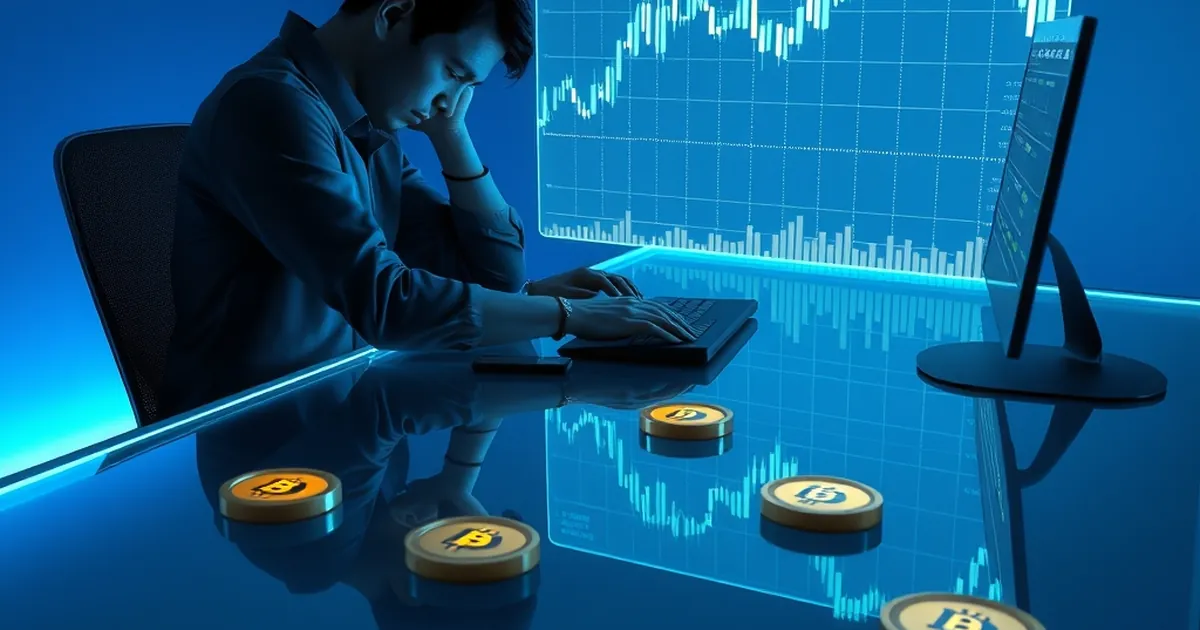
The notion that crypto traders operate best in a state of constant, high-stakes decision-making is a persistent myth. In reality, cognitive resources are finite, and the unique psychological pressures of the altcoin market—where volatility is the norm and information is asymmetrical—accelerate mental depletion. The question isn’t whether fatigue sets in, but precisely when the cost of an additional choice outweighs its potential benefit. Research into decision fatigue suggests that for most traders, the tipping point occurs after approximately seven significant, non-routine decisions.
The Cognitive Load of Unpredictable Reward Schedules
Unlike traditional markets with defined trading hours and relatively predictable patterns, the cryptocurrency market operates 24/7. This environment creates a perfect storm for decision fatigue because it relies on a variable-ratio reinforcement schedule—a concept famously studied by psychologist B.F. Skinner.
In Skinner’s experiments, pigeons pecking a lever that delivered food on an unpredictable schedule pecked more persistently and for longer than those on a fixed schedule. Crypto traders experience a similar dynamic. The occasional, unpredictable “win” (a sudden 20% pump on a low-cap altcoin) reinforces the behaviour of constant monitoring and frequent trading. This pattern makes it exceptionally difficult to stop, even as mental resources deplete. After roughly five to seven of these high-stakes, reward-uncertain decisions, the brain’s prefrontal cortex—responsible for executive function and impulse control—begins to show measurable signs of fatigue.
The Seven-Decision Ceiling in Practice
A 2011 study by researchers at Ben-Gurion University on judicial parole decisions found that judges were significantly more likely to grant parole early in the day or after a food break. The probability of a favourable ruling dropped from around 65% to nearly zero just before lunch. The researchers attributed this to decision fatigue, not bias.
For a crypto trader, the equivalent is the seventh major decision of a session. This might include:
- Entry timing: Deciding to open a long position on a breakout.
- Exit timing: Choosing to take a 15% profit or hold for 25%.
- Risk adjustment: Moving a stop-loss or adding to a losing position.
- Asset switching: Rotating from ETH into a newly trending DeFi token.
After the seventh such decision, the quality of analysis degrades. The trader defaults to the path of least resistance—often overtrading or stubbornly refusing to cut a loss—because the cognitive energy required to evaluate new information accurately is no longer available.
Loss Aversion Amplifies the Toll
Daniel Kahneman’s prospect theory explains another layer of this phenomenon. Loss aversion dictates that the psychological pain of losing is roughly twice as powerful as the pleasure of an equivalent gain. In a high-volatility altcoin market, every decision carries the potential for a loss. This means each choice is not just a cognitive event but an emotional one, drawing on the same limited pool of mental energy.
After four or five decisions that involve a near-miss or a small loss, the trader’s brain is already operating in a depleted state. The sixth and seventh decisions become disproportionately taxing, as the amygdala (emotion centre) overrides the prefrontal cortex. This is why many traders report making their worst trades—panic sells or reckless buys—at the end of a long session, not the beginning.
Practical Guardrails for the UK Trader
The forward-looking approach is not to eliminate fatigue but to architect your trading environment around this seven-decision ceiling.
- Batch your decisions: Treat your first hour of the day as your peak cognitive window. Execute the seven most critical decisions—entry, exit, and risk adjustments—during this time. After that, switch to a “no-trade” zone where you only observe.
- Use pre-set rules: Automate stop-losses and take-profit levels before you make any decisions. This removes the need for a separate, fatiguing choice later when the market moves against you.
- Schedule deliberate breaks: The judicial study showed that a simple break (a meal or a rest) restored decision quality. A 20-minute walk or a complete screen-off period after your seventh decision can reset your cognitive baseline for the next session.
The most successful traders in the UK’s crypto space are not those with the highest tolerance for stress. They are the ones who respect the biological limits of the human brain. Stop at seven decisions. Your portfolio—and your sanity—will thank you.